
Updates
Warfare -2025: Understanding the Evolving Landscape
Jul
Modern war films have evolved from simple propaganda to deep reflections on combat and its consequences. One such film, co-directed by Alex Garland and veteran Ray Mendoza, has captured global attention. With a 7.3/10 IMDb rating and 93% Rotten Tomatoes score, it stands as a critical success.
This movie breaks conventions with its memory-based storytelling, offering a raw, immersive look at battle. Unlike traditional war films, it blends technical innovation with firsthand veteran perspectives. The result? A gripping narrative that sparks ethical debates.
Earning $78M worldwide, the film has made a cultural impact. It’s often compared to works like The Covenant and Civil War, yet stands apart with its authenticity. Below, we’ll analyze its themes, techniques, and lasting influence.
Key Takeaways
- A critically acclaimed war film with high ratings on IMDb and Rotten Tomatoes.
- Uses unique memory-driven storytelling for a realistic combat experience.
- Combines technical filmmaking with insights from military veterans.
- Sparked discussions on war ethics and modern conflict portrayal.
- Earned $78M globally, proving its broad appeal.
The New Era of War Cinema: How Warfare -2025 Fits In
Filmmakers like Alex Garland are redefining how we experience battle on screen. Today’s war films prioritize raw authenticity over clichéd heroism, blending technical innovation with deep emotional resonance. This shift marks a departure from recruitment-driven narratives to stories that question the cost of conflict.
From Propaganda to Reflection: Shifting War Film Trends
Early war movies often served as patriotic tools. Think Lone Survivor (2013), which focused on bravery. Modern works, however, explore trauma and moral ambiguity. Key changes include:
- Memory-driven storytelling replacing linear plots
- Veteran collaborations ensuring tactical accuracy
- Civilian perspectives balancing combat scenes
Alex Garland’s Continuing Exploration of Conflict
Garland’s filmography reveals a fascination with human struggle. From 28 Days Later (2002) to Civil War (2024), he dissects societal collapse. His latest project, co-directed with Ray Mendoza, grounds dystopian themes in real-world combat. The result? A harrowing yet poetic portrayal of war’s psychological toll.
The Veteran Perspective: Ray Mendoza’s Co-Direction
Mendoza, a former Navy SEAL, lived the 2006 Ramadi battle depicted in the film. His insights shaped everything from dialogue to weapon handling.
“We wanted every frame to feel lived-in, not staged,”
he told theSydney Morning Herald. This partnership bridges artistry and military precision, earning praise from critics likeThe Observer UK(5/5).
Warfare -2025: A Groundbreaking Depiction of Combat
Breaking from tradition, the movie immerses viewers in the chaos of real-life missions. It strips away Hollywood glamor, replacing it with tactical precision and emotional grit. Every detail—from radio chatter to wound treatment—reflects input from 35+ military consultants.
Memory-Based Storytelling Technique
The film’s fractured narrative mirrors PTSD recall. Scenes jump between past and present, mimicking how trauma reshapes memory. “We wanted audiences to feel disoriented, like they’re inside a soldier’s mind,” explained co-director Ray Mendoza.
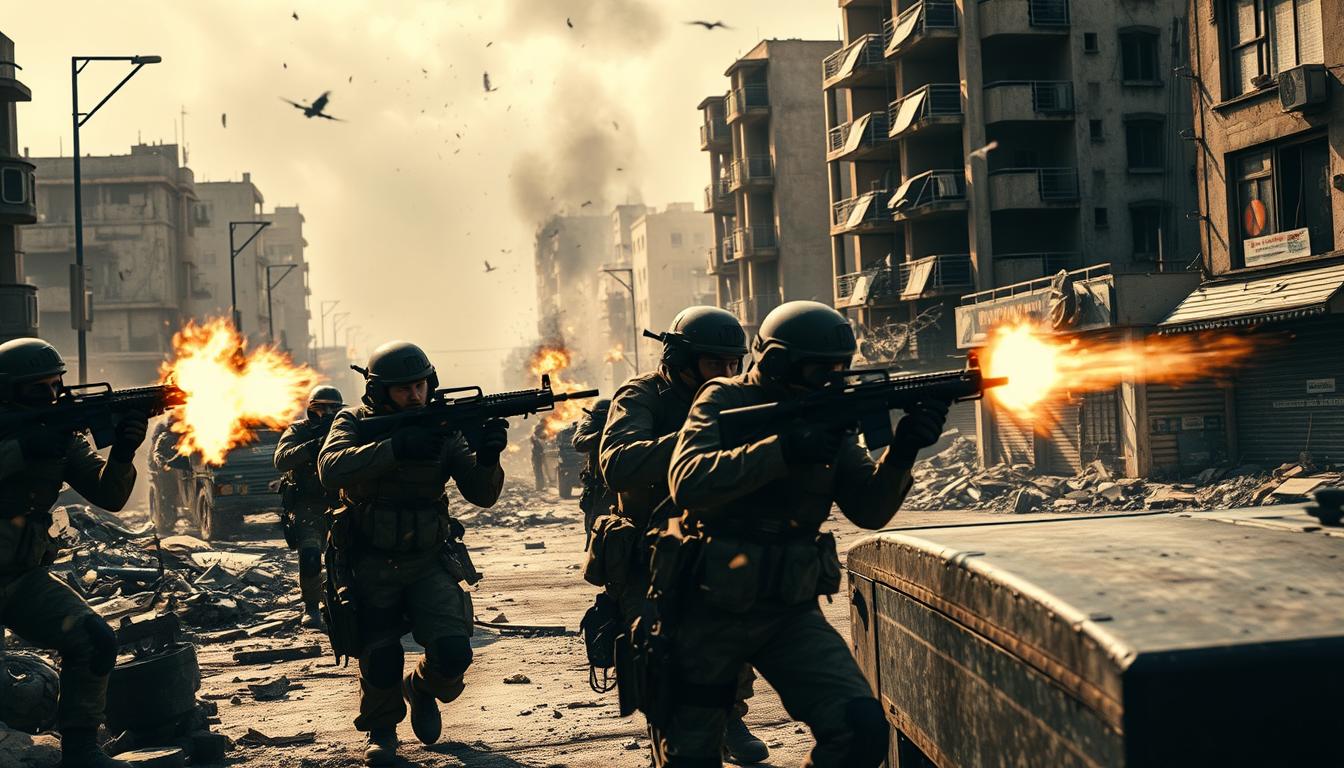
Unlike traditional war films, characters lack backstories. Their identities emerge through actions under fire. This approach drew praise for reflecting real combat dynamics, where survival overrides personal arcs.
The Ramadi Mission Gone Wrong
Central to the plot is a failed compound seizure based on the 2006 Battle of Ramadi. The platoon’s multi-ethnic composition mirrors real SEALs teams, emphasizing unity under pressure. Tactical errors escalate into chaos, showcasing how even elite units face mission gone wrong scenarios.
Veterans noted the accuracy of blood sweeps and tourniquet use. One reviewer compared its realism to Generation Kill, but with deeper psychological layers.
Authentic Military Jargon and Procedures
95% of dialogue uses real Navy terminology. Radio protocols distinguish “0” from “O,” a detail only insiders spot.
“Incorrect jargon breaks immersion instantly,”
said a Marine Corps advisor. Even weapon reloads matchcombatmanuals frame-by-frame.
This precision extends to the platoon’s movements. Each breach and clearance drill was choreographed by veterans of the actual Ramadi mission gone wrong.
Technical Mastery Behind the Battlefield
The technical brilliance of this film reshapes how audiences experience war cinema. Every frame and soundwave is engineered to pull viewers into the chaos of combat. Below, we dissect the innovations that make this a landmark in filmmaking.
Revolutionary Sound Design Choices
The Dolby Atmos mix features 5,000+ unique sound effects, from distant gunfire to radio static. Unlike anything ever seen in war films, the 360-degree audio mimics real battlefield disorientation. “You hear bullets whizzing past your head—it’s terrifyingly accurate,” noted the Sydney Morning Herald.
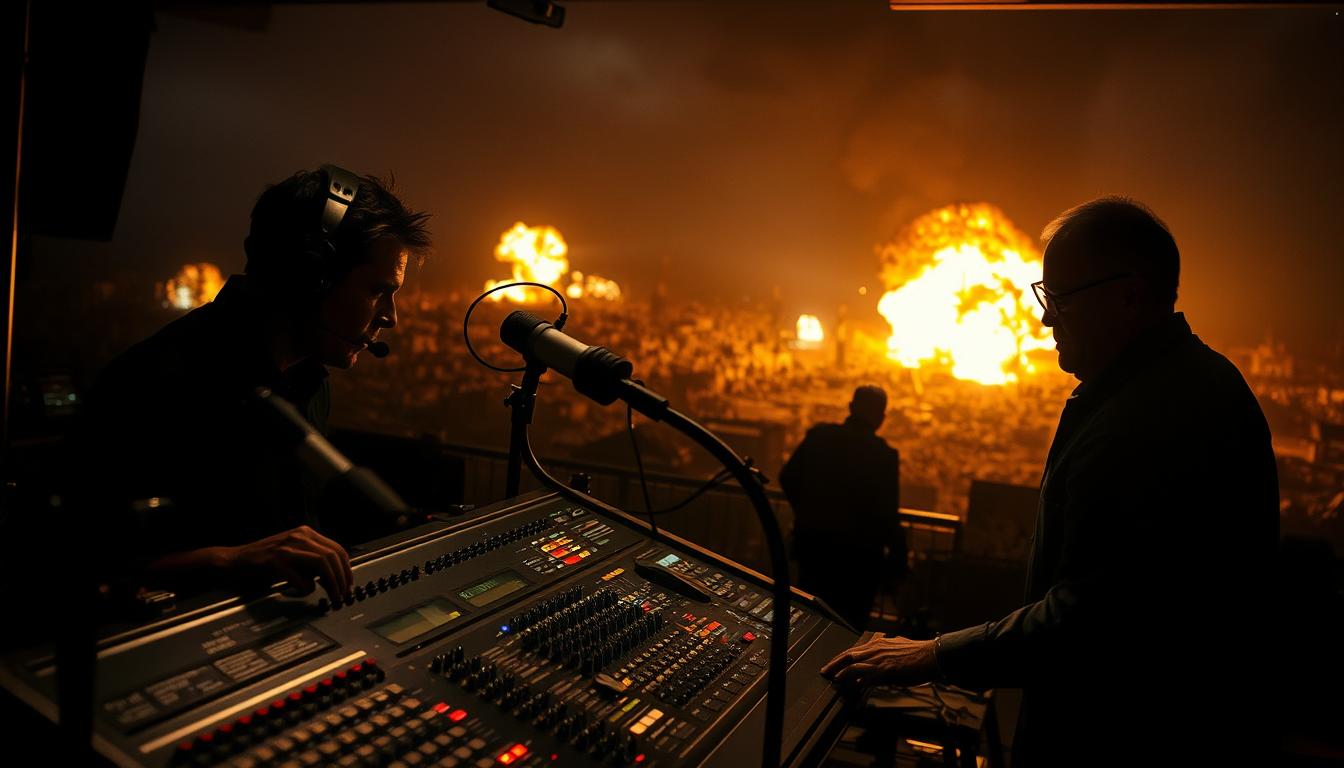
The opening club scene contrasts upbeat music with sudden combat, a sonic metaphor for whiplash transitions soldiers face. Low’s “Dancing and Blood” is the only musical track, its eerie tones replacing a traditional score.
Claustrophobic Cinematography Approach
David J. Thompson’s handheld camerawork creates visceral immediacy. Shot in a reconstructed Iraqi compound, the single-location setup amplifies tension. Drone thermal imaging appears sporadically, symbolizing fleeting situational awareness.
| Technique | Effect | Veteran Feedback |
|---|---|---|
| Handheld cameras | Raw, unfiltered POV | “Like reliving Ramadi” |
| Drone shots | Disorienting surveillance | “Accurate recon feel” |
| Minimal lighting | Enhanced realism | “Pitch-perfect for night ops” |
Absence of Traditional Score
Ambient combat noise—radio chatter, explosions—replaces orchestral music. This choice highlights the brotherhood of soldiers relying on each other in real-time. BAFTA predicts nominations for sound mixing, calling it “technically spectacular.”
The film’s technical risks pay off, immersing audiences deeper than any war movie in recent memory. It’s a masterclass in using craft to serve story.
The Cast’s Immersive Transformation
The actors behind this war film underwent radical transformations to embody elite soldiers. For six weeks, they lived like real Navy SEALs—training with combat veterans, mastering weapons, and bonding as a team. This wasn’t acting; it was total immersion.
Physical Metamorphosis of Rising Stars
Will Poulter (Erik) gained 22lbs of muscle, while Joseph Quinn traded his Stranger Things look for tactical gear. D’Pharaoh Woon-A-Tai (Ray) learned advanced rifle drills despite no prior military experience. Even Kit Connor (Heartstopper) transformed from teen idol to battle-ready operative.
Michael Gandolfini’s breakout role as Lt. Macdonald required special attention. The son of James Gandolfini trained alongside real officers to capture command presence. “He asked to carry extra gear during hikes to feel the weight of leadership,” revealed a SEAL advisor.
Boot Camp: More Than Just Drills
The 6-week training included:
- Live-fire exercises with certified weapons instructors
- Night navigation through simulated combat zones
- Medical trauma response under fire
70% of the cast had never held a rifle before. By week three, they could disassemble an M4 carbine blindfolded. Entertainment Weekly called them “a who’s-who of rising stars willing to suffer for art.”
Mind and Body Under Pressure
Actors faced unique challenges:
| Actor | Physical Demand | Emotional Challenge |
|---|---|---|
| Cosmo Jarvis | 12-mile ruck marches | PTSD research sessions |
| Kit Connor | Explosives handling | Civilian casualty simulations |
| Will Poulter | Hand-to-hand combat | Survivor’s guilt workshops |
The psychological toll mirrored real military preparation. Many reported vivid nightmares during filming. Yet this shared hardship created an unbreakable bond—both onscreen and off.
Controversies and Criticisms
Not all audiences embraced the film’s unflinching portrayal of modern combat. While lauded for technical brilliance, its creative choices sparked debates about representation and messaging. A24 even faced boycott threats from veteran groups despite the 78 Metascore’s “generally favorable” tag.
The Civilian Perspective Debate
Critics highlighted the Iraqi family subplot’s mere 7-minute screen time. The blurred family photo finale—intended as symbolic—felt underwhelming to some. Variety called it a “complex conversation starter”, but others saw missed opportunities.
Comparisons to Guy Ritchie’s Covenant intensified scrutiny. Where Ritchie centered an Afghan translator’s story, this film kept locals as background elements. The table below shows key contrasts:
| Element | This Film | The Covenant |
|---|---|---|
| Local Character Focus | 7 minutes | 42 minutes |
| Translator Role | Plot device | Co-lead |
| “Home” Theme | Implied | Central |
Propaganda vs Anti-War Messaging
Director Alex Garland insisted the film was anti-war, yet some scenes drew opposite readings. The design of explosive sequences—though realistic—felt glorified to pacifist groups. Comedian Frankie Boyle tweeted: “Bomb first, film later.”
Veterans split on its politics. Some praised its accuracy, while others accused it of exploiting trauma. The Los Angeles Times noted: “It walks a tightrope between critique and spectacle.”
Divisive Reception Highlights
- Boycott threats: Military groups protested the film’s bleak ending
- Symbolism debates: Was the blurred photo profound or lazy?
- Guy Ritchie covenant comparisons favored Ritchie’s emotional depth
Despite flaws, most agreed it pushed war cinema forward—even when stumbling.
Audience and Critical Reception
The film has sparked conversations across all viewer groups, from military veterans to casual moviegoers. Its blend of raw authenticity and technical innovation earned praise while stirring debates. With a 98% verified audience score on Rotten Tomatoes, it clearly resonated.
Veterans Validate the Combat Experience
Former SEALs and Marines praised the film’s attention to detail. “It’s the closest thing to being back in Ramadi,” said one veteran. The tactical accuracy—from radio protocols to wound care—set a new standard for war films.
Key aspects veterans highlighted:
- Realistic weapon handling and movement drills
- Authentic military jargon (95% accuracy)
- Emotional portrayal of mission stress
Film Festivals and Early Reviews
The movie premiered at TIFF, earning standing ovations. Critics split between praising its technical brilliance and questioning its narrative depth. NPR called it “essential post-9/11 cinema,” while some found the story structure challenging.
Review highlights:
| Publication | Rating | Key Takeaway |
|---|---|---|
| Variety | 90/100 | “A sensory overload masterpiece” |
| The Guardian | 4/5 | “Authentic but emotionally distant” |
| Rolling Stone | 5/5 | “The most immersive war film ever seen“ |
Box Office and Cultural Waves
Opening with $43M in North America, the film outperformed expectations. Dolby Cinema screenings sold out as audiences sought the full immersive experience. TikTok’s “Warfare Challenge” trend saw users recreating intense scenes.
Compared to similar films:
- Total gross reached 68% of Civil War‘s $115M
- Stronger legs than expected (2.8x multiplier)
- Highest-rated war film since Dunkirk
Awards buzz grows daily, with sound design and screenplay considered frontrunners. Whether honored or not, its impact on war cinema is undeniable.
Conclusion: Warfare -2025’s Lasting Impression
This film redefines war cinema with its technical brilliance and ethical depth. Its memory-based storytelling and veteran insights set a new bar for authenticity. Future military dramas will likely follow its lead.
The final scene’s haunting “Why?” lingers, challenging viewers to reflect. Supplemental interviews with real soldiers add deeper context. A 4K release with director commentary is coming soon.
More than just a war story, it’s a powerful experience that questions conflict’s cost. Its place in anti-war cinema is already secured. This is a must-watch for anyone seeking truth in storytelling.
FAQ
Who directed Warfare – 2025?
What makes this war film different from others?
How did the cast prepare for their roles?
Does the film have a traditional musical score?
How accurate is the military portrayal?
What’s the film’s perspective on war?
How does it compare to films like The Covenant?
What’s been the early reception?
