
Updates
Breaking Bad: The Ultimate Guide to the Series
Aug
From 2008 to 2013, Breaking Bad captivated audiences with its gripping storytelling and unforgettable characters. The series follows Walter White, a high school chemistry teacher, whose life takes a dramatic turn when he enters the dangerous world of drug manufacturing. Over five seasons and 62 episodes, viewers witness his transformation from a mild-mannered educator to a ruthless meth kingpin.
Praised as one of the best shows in television history, Breaking Bad earned a stellar 9.5/10 IMDb rating from 2.4 million reviews. Its unique blend of crime drama, dark comedy, and moral complexity has drawn comparisons to classics like The Sopranos and The Wire. The show’s legacy continues to influence pop culture, making it a must-watch for fans of intense storytelling.
This guide dives into the series’ key elements, including character analysis, pivotal episodes, and its lasting cultural impact. Whether you’re a longtime fan or new to the show, there’s always something to discover in the world of Breaking Bad.
Key Takeaways
- Follow Walter White’s journey from a school chemistry teacher to a drug empire leader.
- Explore the show’s 5-season run, featuring 62 episodes of gripping drama.
- Discover why it’s ranked as one of the best shows with a 9.5/10 IMDb rating.
- Experience a mix of crime drama, dark humor, and moral dilemmas.
- Learn about its cultural influence and comparisons to other TV classics.
Introduction to Breaking Bad
When Vince Gilligan introduced the world to Walter White, he redefined television storytelling. The series, created by Vince Gilligan, follows a school chemistry teacher whose life takes a drastic turn after a lung cancer diagnosis. Desperate to secure his family’s future, Walter partners with former student Jesse Pinkman to enter the dangerous world of drug manufacturing.

What is Breaking Bad?
The premise of the show is both simple and profound. Walter White, played by Bryan Cranston, uses his chemistry expertise to cook meth. His goal is to leave behind enough money for his family after he’s gone. Over time, his journey transforms him from a mild-mannered teacher into a feared criminal. This transformation is the heart of the series.
The Creation of Breaking Bad by Vince Gilligan
Vince Gilligan, the mastermind behind the show, aimed to “turn Mr. Chips into Scarface.” This bold vision was rooted in exploring moral decay and the lengths people go to protect their loved ones. Gilligan’s storytelling redefined TV with its serialized character development and intense focus on Walter’s evolution.
Why Breaking Bad Became a Cultural Phenomenon
The series resonated deeply with audiences, earning a 97% Rotten Tomatoes score and over 25,000 audience ratings. Its themes of family, morality, and the distorted American Dream struck a chord. The show’s influence can be seen in mainstream media and pop culture, solidifying its place as a modern classic.
- Walter White’s journey from a school chemistry teacher to a drug kingpin is unforgettable.
- Vince Gilligan’s vision transformed TV storytelling.
- The series explores themes of family, morality, and survival.
- Its cultural impact continues to inspire new generations of viewers.
The Main Characters of Breaking Bad
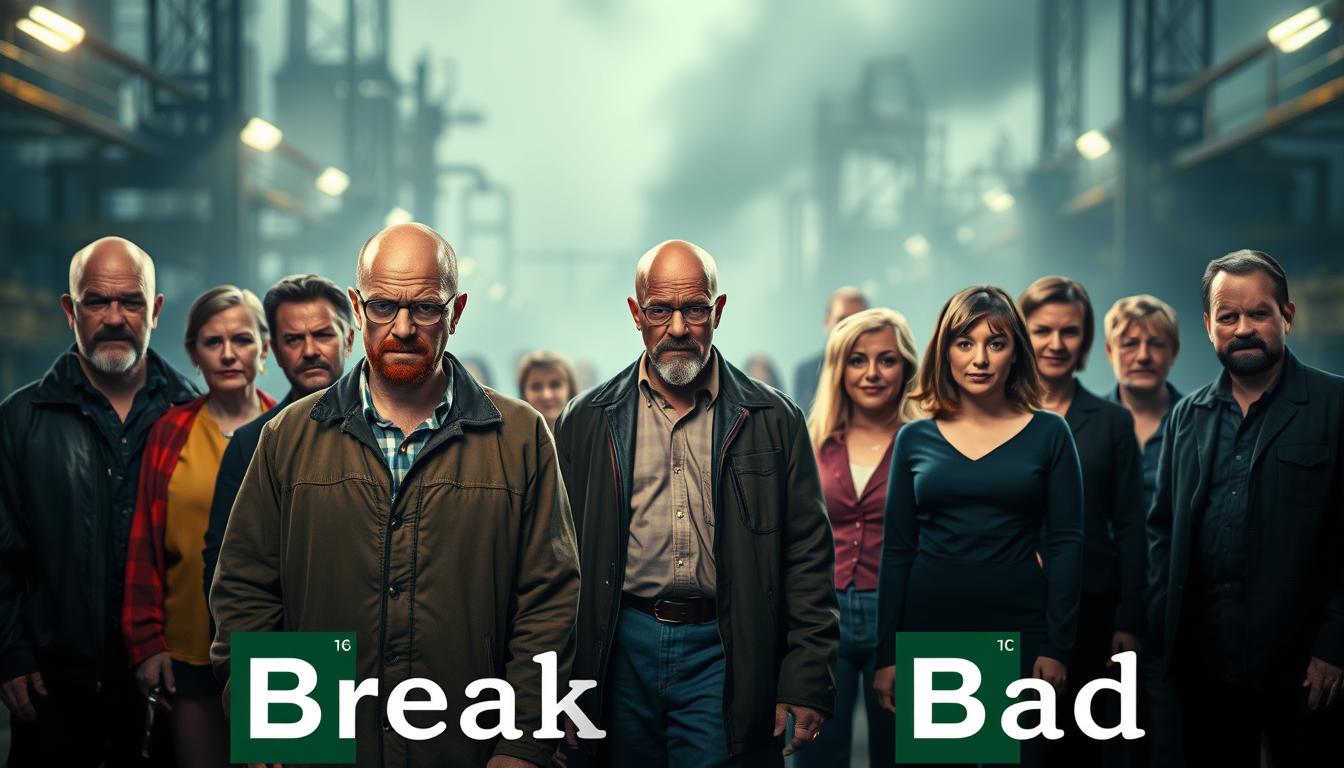
At the heart of the series lies a cast of unforgettable characters. Each one brings depth and complexity to the story, making the show a masterclass in character development. From the transformation of a high school chemistry teacher to the emotional journey of a young partner, the characters drive the narrative forward.
Walter White: From Chemistry Teacher to Drug Kingpin
Bryan Cranston delivers an Emmy-winning performance as Walter White. Starting as a mild-mannered high school chemistry teacher, Walter’s life changes after a cancer diagnosis. His journey into the drug trade reveals his darker side, as he embraces his alter ego, Heisenberg. Cranston Walter White’s portrayal is both chilling and captivating, making Walter one of TV’s most iconic characters.
Jesse Pinkman: The Heart of the Series
Aaron Paul shines as Jesse Pinkman, Walter’s former student and partner. Jesse’s emotional arc is central to the series, as he grapples with guilt, loyalty, and survival. Jesse Pinkman’s vulnerability and moral conflicts make him a fan favorite. Paul’s breakout role earned him critical acclaim and multiple awards.
Supporting Characters: Skyler, Hank, and Saul
The supporting cast adds layers to the story. Anna Gunn’s Skyler White balances fear and complicity as Walter’s wife. Dean Norris’ Hank Schrader, a DEA agent, evolves from a comic relief figure to a relentless investigator. Bob Odenkirk’s Saul Goodman, the shady lawyer, brings humor and wit, later anchoring the spin-off Better Call Saul. Together, this cast crew creates a rich, interconnected world.
Key Episodes and Moments in Breaking Bad
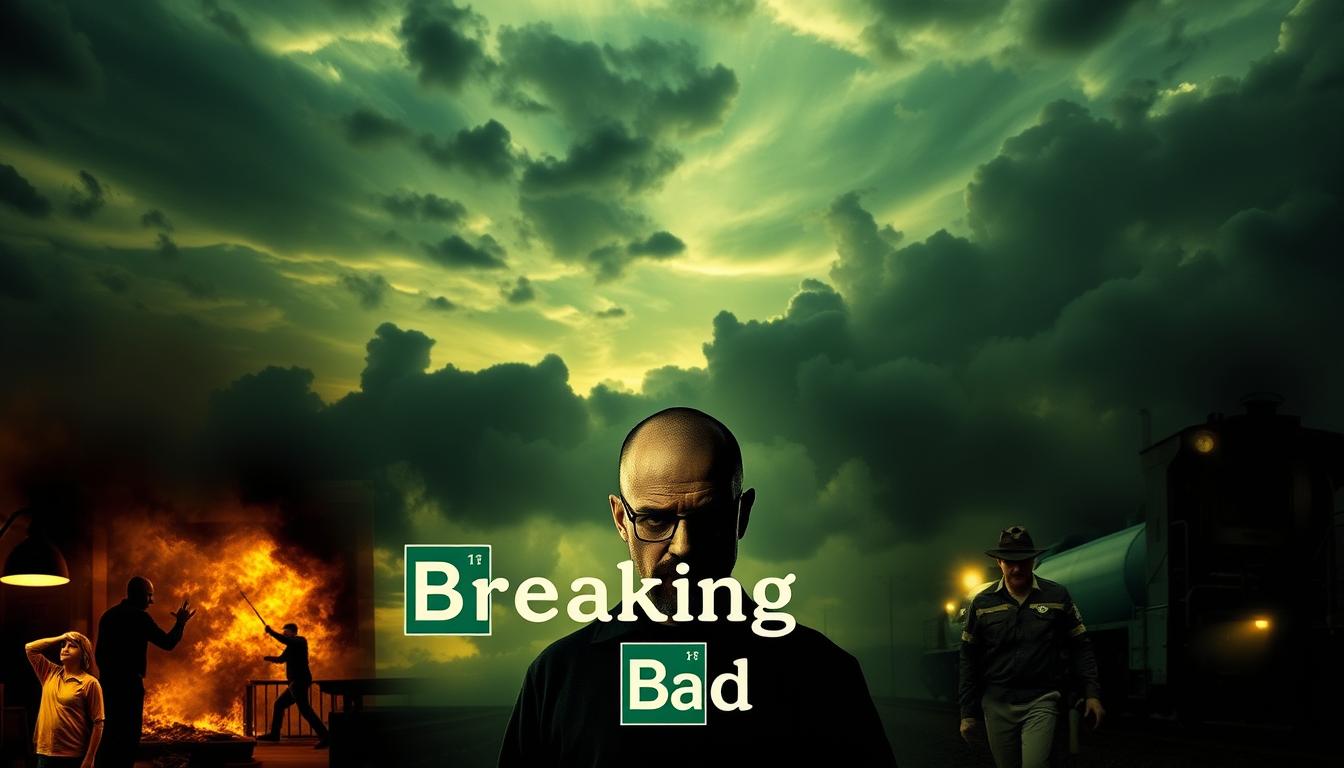
Every episode of the show is a masterclass in storytelling and tension. From the pilot to the final moments, the series delivers unforgettable scenes that keep viewers hooked. These moments not only drive the plot but also showcase the show’s technical brilliance.
Pilot Episode: Setting the Stage
The pilot episode introduces Walter White, a high school chemistry teacher, and his shocking cancer diagnosis. This pivotal moment sets the stage for his transformation. The first meth cook with Jesse Pinkman is a tense and unforgettable scene, marking the start of their dangerous partnership.
Season Finales: Turning Points in the Series
Each season finale leaves a lasting impact. In “Gliding Over All,” Hank’s discovery of Walter’s secret changes everything. “Face Off” delivers one of the most explosive scenes in TV history, with Gus Fring’s dramatic exit. These moments redefine the game and keep fans eagerly awaiting the next episode.
Memorable Scenes: “Stay Out of My Territory”
One of the most iconic scenes occurs in Season 2, Episode 10. Walter’s declaration, “Stay Out of My Territory,” signals his shift from necessity to ego-driven actions. This moment highlights his growing addiction to power and control, moving away from his initial family motives.
- The pilot episode establishes Walter’s cancer diagnosis and first meth cook.
- Season finales like “Gliding Over All” and “Face Off” redefine the story.
- The “Stay Out of My Territory” scene marks Walter’s descent into ego-driven decisions.
- Cinematic techniques, including desert landscapes and symbolic color palettes, enhance the storytelling.
- Directors like Vince Gilligan, Rian Johnson, and Michelle MacLaren contribute to the show’s technical brilliance.
Conclusion: The Legacy of Breaking Bad
The legacy of Walter White’s journey continues to shape modern television. The series redefined storytelling with its gripping narrative and unforgettable cast. Its influence extends beyond the screen, inspiring darker antihero narratives like Ozark and setting new standards for TV drama.
With 16 Emmys, including four Best Actor wins for Bryan Cranston, the show’s excellence is undeniable. The expanded universe, featuring the prequel Better Call Saul and the epilogue film El Camino, keeps fans engaged. These spin-offs delve deeper into the world created by Vince Gilligan, enriching the original story.
Fan culture thrives, with Albuquerque filming locations becoming tourist hotspots and annual conventions celebrating the series. Walter White’s transformation from a chemistry teacher to a feared criminal remains a benchmark for character-driven storytelling. His story is a testament to the power of complex narratives in the Peak TV era.
