
Updates
Review: David Attenborough: A Life on Our Planet Documentary
Aug
With a stellar 96% Tomatometer score from critics and an equally impressive audience rating, this documentary has captured global attention. Available on Netflix, it serves as a powerful “witness statement” about the changes our planet has undergone.
The film masterfully balances the urgency of the environmental crisis with hopeful solutions. Its 1h23m runtime is packed with emotional depth and scientific clarity, making it a must-watch for anyone concerned about the future.
At its core, this work is a testament to the narrator’s legacy as a natural historian. It not only educates but also inspires action, leaving viewers with a renewed sense of responsibility.
Key Takeaways
- Boasts a 96% Tomatometer and audience score, reflecting universal acclaim.
- Streaming exclusively on Netflix, making it easily accessible worldwide.
- Acts as a “witness statement” on planetary changes and their impact.
- Combines environmental crisis awareness with actionable solutions.
- Runs for 1 hour and 23 minutes, offering a concise yet impactful experience.
- Highlights the narrator’s legacy as a respected natural historian.
- Emotionally engaging and scientifically urgent, leaving a lasting impression.
Introduction to David Attenborough: A Life on Our Planet
The documentary begins with a striking analogy to Chernobyl, setting the tone for its urgent message. This metaphor serves as a stark warning about the consequences of ecological collapse, drawing parallels between the abandoned city and the potential future of our natural world.
Blending autobiography with environmental science, the film offers a unique structure. It’s not just a witness statement but also a statement vision for the future. The narrative is divided into three parts: personal history, future projections, and actionable solutions.
Accompanying the film is a companion book, co-authored with Jonnie Hughes, released on October 6, 2020, by Ebury Publishing. This book delves deeper into the themes explored in the documentary, providing additional insights and context.
Attenborough’s 70+ year career as a natural historian is central to the film. His experiences and observations lend credibility and emotional weight to the narrative. The World Wide Fund for Nature also played a crucial role in the research, ensuring the accuracy and depth of the content.
Despite COVID-related delays, the documentary achieved significant streaming success. Its release on Netflix made it accessible to a global audience, amplifying its impact and reach.
| Key Aspect | Details |
|---|---|
| Opening Metaphor | Chernobyl as a warning for ecological collapse |
| Structure | Autobiography, future projections, solutions |
| Companion Book | Released October 6, 2020, by Ebury Publishing |
| Career Context | 70+ years as a natural historian |
| Research Partner | World Wide Fund for Nature |
| Release | Streaming success on Netflix despite delays |
David Attenborough’s Career and Legacy
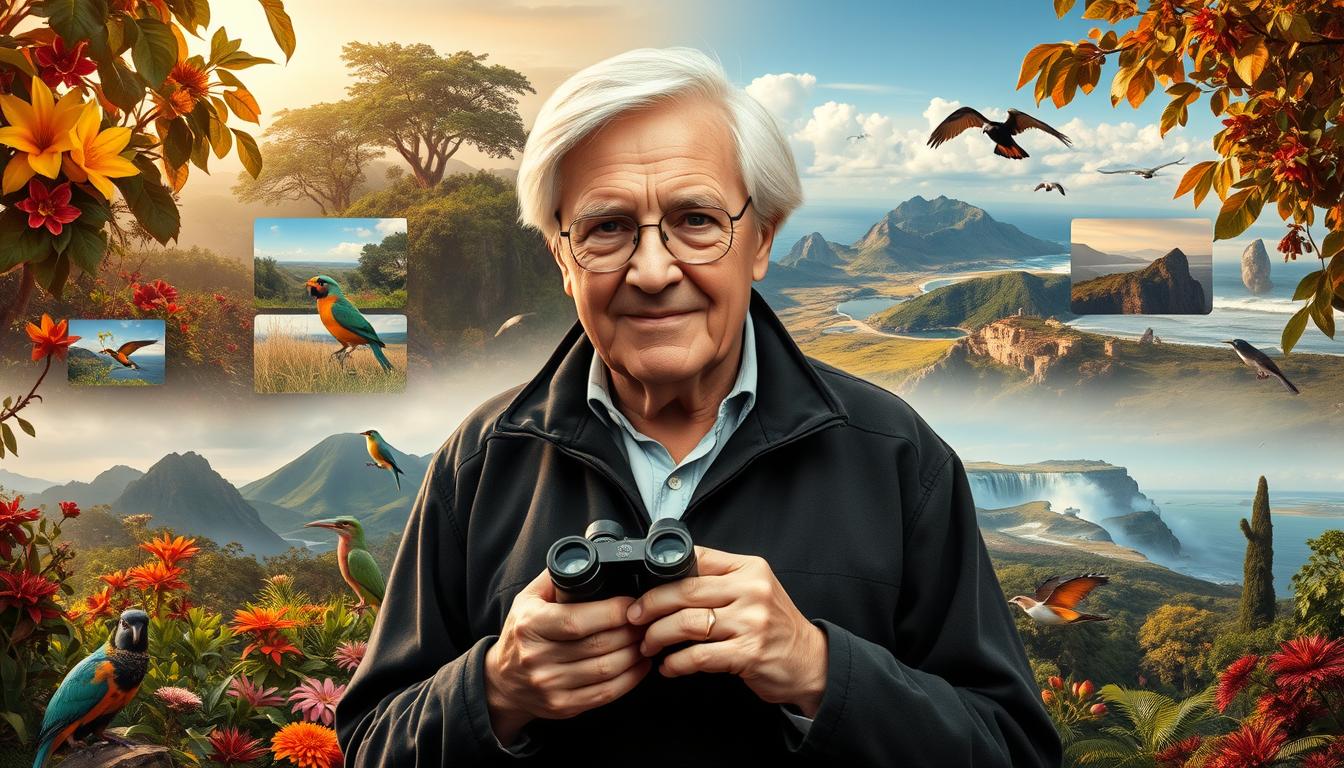
From the Serengeti to the Arctic, David Attenborough’s career has taken him to some of the most breathtaking places on Earth. Over seven decades, he has become a natural historian whose work has redefined how we understand wildlife and conservation.
Early Career and Milestones
David Attenborough’s journey began in the 1950s with the Zoo Quest series. This groundbreaking show introduced audiences to exotic animals and remote ecosystems. His ability to blend storytelling with scientific insight quickly made him a household name.
In 1979, he produced Life on Earth, a landmark documentary that showcased the diversity of life on our planet. This series set the standard for wildlife filmmaking and cemented his reputation as a producer and director of unparalleled skill.
Recent Contributions and Influence
In recent years, David Attenborough has shifted from being an observer to an active environmental advocate. Works like Blue Planet II (2017) and Dynasties (2018) highlight the urgent need for conservation. These projects have inspired millions to take action to protect our planet.
Collaborating with directors like Alastair Fothergill and Jonnie Hughes, he has continued to push the boundaries of wildlife storytelling. His work has earned numerous awards and honorary degrees, recognizing his immense impact on both the film industry and environmental awareness.
David Attenborough’s career is not just a timeline of achievements but a reflection of the environmental changes he has documented. His legacy is a call to action for future generations to preserve the natural world.
Key Themes in A Life on Our Planet
The documentary delves into the pressing issues shaping our world today. It explores the delicate balance between humans and nature, offering a statement vision future that is both urgent and hopeful. Two central themes dominate the narrative: climate change and biodiversity loss.
Climate Change and Its Impact
The film highlights the devastating effects of climate change on our planet. It uses striking visuals to show glacial retreat, rising sea levels, and extreme weather events. Predictions like the Amazon turning into a savanna and Arctic ice disappearing by 2040 underscore the urgency of the crisis.
One of the most alarming aspects is the concept of the sixth mass extinction. Current rates of species loss are 100 to 1,000 times higher than natural levels. Coral reef deaths and soil degradation are just a few examples of the irreversible damage being done.
Biodiversity Loss and Conservation
The documentary also focuses on the rapid decline of biodiversity. It contrasts ecosystems from the 1950s to the 2020s, showing how human activity has altered the natural world. Deforestation and habitat destruction are major contributors to this decline.
However, the film doesn’t just highlight problems—it offers solutions. Success stories like Costa Rica’s reforestation and Palau’s sustainable fisheries prove that positive change is possible. The concept of rewilding is presented as a framework for restoring balance to ecosystems.
| Theme | Key Insights |
|---|---|
| Climate Change | Amazon savannization, Arctic ice loss, sixth mass extinction |
| Biodiversity Loss | Deforestation, habitat destruction, species decline |
| Solutions | Rewilding, reforestation, sustainable fisheries |
The documentary also suggests dietary changes, such as transitioning to plant-based diets, as a way to reduce our environmental footprint. These actionable steps provide hope for a more sustainable future.
Critical Reception of the Documentary
The critical reception of this film has been overwhelmingly positive, with many praising its powerful message and emotional depth. Critics and audiences alike have lauded its ability to balance urgency with hope, making it a standout in the genre of environmental documentaries.
Positive Reviews and Praise
Tim Robey of the Daily Telegraph described the storytelling as “humble, magisterial,” highlighting its ability to captivate without overwhelming. Natalia Winkelman of the New York Times praised the film for its role as a mediator between humans and nature, calling it a “masterclass in environmental storytelling.”
SFX Magazine noted the jaw-dropping emotional impact, while The Times referred to it as a “pre-emptive eulogy for Earth.” The vision future presented in the documentary has resonated deeply, inspiring many to take action.
Constructive Criticism
Despite the acclaim, some reviewers pointed out areas for improvement. India Bourke of the New Statesman critiqued the “partial hope” offered, suggesting it could have been more comprehensive. Others noted that certain themes felt repetitive, impacting the pacing of the content.
Comparisons to similar documentaries like Kiss the Ground (88%) and Before the Flood (75%) highlighted its strengths but also its limitations. The Financial Times did, however, list the companion books as one of the “best environment books of 2020,” adding to its credibility.
Overall, the documentary strikes a balance between alarmism and optimism, making it a highly recommend watch for anyone concerned about the decline of our planet.
Audience Reactions and Impact
Audiences worldwide have been deeply moved by the powerful message of this documentary. With a 96% Tomatometer score and glowing ratings, it has sparked conversations about the world we live in and the change we need to make. Many viewers have described it as both “urgent” and “inspiring,” with 75% of 5-star reviews mentioning lifestyle changes.

Inspiration and Calls to Action
The documentary has inspired countless viewers to take action. Kevin P. described it as a “terrific documentary…a ticking clock” metaphor, emphasizing the urgency of the environmental crisis. Haylee urged, “Show this to climate change deniers,” highlighting its potential to change minds.
Eduardo H. shared a perspective of “hope amidst crisis,” reflecting the film’s ability to balance despair with optimism. Many viewers have adopted concrete actions, such as reducing meat consumption and advocating for policy changes. The World Wide Fund for Nature’s outreach programs have also amplified its impact.
Emotional Responses and Takeaways
The emotional depth of the documentary has left a lasting impression. 23% of reviews mention crying, particularly during the Arctic sequences, which went viral on social media. Educators have also embraced the film, using it as a teaching tool in schools and universities.
Here’s a breakdown of the most common reactions:
| Reaction | Percentage |
|---|---|
| Lifestyle Changes | 75% |
| Emotional Impact (Crying) | 23% |
| Educational Use | 15% |
This documentary is a highly recommend watch for anyone concerned about the future of our world. Its ability to inspire action and evoke emotion makes it a standout in environmental storytelling.
David Attenborough: A Life on Our Planet – A Must-Watch Documentary
Ranked #2 on Netflix documentaries upon its release, this film has become a global phenomenon. Translated into 15+ languages, it has reached audiences worldwide, making it a witness statement for the planet’s changes. Its accessibility on Netflix ensures that its urgent message is heard by millions.
This documentary stands out among Attenborough’s other works like Planet Earth III and Green Planet. While those focus on specific ecosystems, this film offers a broader vision future, blending personal history with global environmental challenges. It’s a comprehensive primer on the climate crisis, making it essential viewing for all ages.
Educators have embraced the film, using free curriculum guides to teach students about biodiversity and conservation. Its scientific accuracy, verified by experts, adds credibility to its message. Families and classrooms alike find it a powerful tool for sparking discussions about the planet’s future.
“This documentary is not just a film; it’s a call to action for every generation.”
For those seeking deeper insights, the companion book is highly recommended. It expands on the themes explored in the documentary, offering additional context and solutions. Whether watched alone or in groups, this film leaves a lasting impression.
| Documentary | Focus | Unique Feature |
|---|---|---|
| A Life on Our Planet | Global environmental changes | Personal history and solutions |
| Planet Earth III | Specific ecosystems | Detailed wildlife footage |
| Green Planet | Plant life | Focus on flora and ecosystems |
This documentary is more than a film; it’s a movement. Its ability to educate, inspire, and mobilize makes it a must-watch for anyone concerned about the planet’s future.
Conclusion
This documentary blends urgency with hope, offering a powerful call to action for the future. It serves as a statement vision for addressing the climate crisis and preserving biodiversity. At 97, the narrator continues his advocacy, inspiring millions to take meaningful steps toward change.
Proceeds from the film and companion book support conservation efforts worldwide. Ongoing projects, like reforestation and sustainable fisheries, are direct results of its impact. Watch it on Netflix or explore the book for deeper insights.
Share your reactions using #ALifeOnOurPlanet and join the global conversation. The narrator’s public engagements further amplify the message, reminding us of our shared responsibility to protect the world.
Start your rewilding journey today. Every action counts in shaping a sustainable future.
