
Updates
The Ultimate Guide to Seinfeld’s Most Iconic Moments

Aug
When it comes to comedy series, few have left a mark as indelible as the legendary show set in New York City. Known as the “show about nothing,” it redefined the sitcom genre with its sharp wit and relatable humor. Over its nine-season run from 1989 to 1998, it delivered 180 episodes that continue to resonate with audiences today, boasting an impressive 8.9/10 IMDb rating.
At the heart of the series was the unforgettable quartet: Jerry, George, Elaine, and Kramer. Their unique dynamic and hilarious antics made every episode a masterpiece. From the infamous “Soup Nazi” to the endlessly quotable “Yada Yada,” the show introduced catchphrases and moments that have become part of pop culture.
This guide dives into the most iconic episodes, explores the characters’ quirks, and shares behind-the-scenes stories that made this series a timeless classic. Whether you’re a longtime fan or new to the show, there’s something here for everyone.
Key Takeaways
- The show redefined sitcoms with its unique “show about nothing” concept.
- It ran for nine seasons, producing 180 episodes with an 8.9/10 IMDb rating.
- The core quartet—Jerry, George, Elaine, and Kramer—created unforgettable chemistry.
- Iconic moments like “The Soup Nazi” and “Yada Yada” became cultural touchstones.
- This guide covers episodes, characters, and behind-the-scenes insights.
Introduction to Seinfeld: A Cultural Phenomenon
Few shows have captured the essence of everyday life like this one. What began as a simple concept—a series about nothing—became a global sensation. Syndicated in 118 countries, it continues to draw 4.1 million daily viewers even in 2023. Its influence extends far beyond its original run, shaping modern comedy in ways few shows have.
The humor of this series resonates because it reflects the awkwardness and frustrations we all face. From social faux pas to mundane annoyances, it turned ordinary moments into extraordinary comedy. This timeless appeal has made it a favorite across generations, especially with its availability on streaming platforms.
E! even ranked it as the “#1 reason the ’90s ruled.” Its unique “no hugging, no learning” rule set it apart, creating characters who were flawed yet relatable. This approach influenced shows like *30 Rock* and *Curb Your Enthusiasm*, proving its lasting impact on television.
Even after all these years, the series remains a cultural touchstone. Its humor, characters, and memorable moments continue to connect with people worldwide. Whether you’re revisiting it or discovering it for the first time, its legacy is undeniable.
The Origins of Seinfeld: How It All Began
The journey of one of TV’s most iconic shows began with a simple idea. Jerry Seinfeld and Larry David wanted to create a series that reflected the quirks of everyday life. Their vision was to craft a show about nothing, yet it became everything to millions of fans.
Jerry Seinfeld and Larry David’s Vision
Jerry Seinfeld, a stand-up comedian, teamed up with Larry David, a writer with a knack for observational humor. Together, they envisioned a series that would focus on the mundane yet hilarious aspects of life. Their goal was to avoid traditional sitcom tropes like moral lessons or dramatic arcs. Instead, they aimed for authenticity and relatability.
The Pilot That Started It All
The pilot episode, titled “The Seinfeld Chronicles,” aired on July 5, 1989. Filmed on a modest budget of $78,000, it introduced viewers to Jerry and his friend George. The plot revolved around a trivial debate over shirt buttons, setting the tone for the show’s unique humor.
Interestingly, Kramer was originally named “Kessler” in the pilot. Elaine Benes, who later became a central character, was absent from this first episode. The network had concerns about whether the show’s New York-centric humor would resonate with a broader audience.
Despite these challenges, the pilot led to an initial order of four additional episodes. Over time, the show evolved. Elaine was added to the cast, and Kramer’s role expanded, making the quartet complete.
| Aspect | Details |
|---|---|
| Pilot Title | “The Seinfeld Chronicles” |
| Air Date | July 5, 1989 |
| Budget | $78,000 |
| Initial Order | 4 additional episodes |
This humble beginning marked the start of a series that would redefine comedy. Its eventual syndication ensured its place in TV history, making it a timeless classic.
The Main Cast: Characters That Defined a Generation
The characters of this legendary sitcom became household names, each leaving a unique mark on pop culture. From Jerry’s observational humor to Kramer’s wild antics, they turned everyday life into comedy gold. Let’s dive into what made these characters so unforgettable.

Jerry Seinfeld: The Comedian Next Door
Jerry Seinfeld played a version of himself, a stand-up comedian navigating life in New York City. His dry wit and relatable observations made him the anchor of the show. Whether debating the right way to eat a Snickers or navigating awkward relationships, Jerry’s humor resonated with audiences.
George Costanza: The Ultimate Neurotic
George Costanza, played by Jason Alexander, was the epitome of neurosis. His constant schemes and self-doubt made him both hilarious and painfully relatable. From lying on his resume to creating the infamous “Festivus,” George’s antics were a highlight of every episode.
Elaine Benes: The Independent Woman
Elaine, portrayed by Julia Louis-Dreyfus, was a trailblazer for female characters in sitcoms. Her sharp wit, iconic dance moves, and no-nonsense attitude made her a fan favorite. Whether battling the Soup Nazi or navigating office politics, Elaine’s independence shone through.
Cosmo Kramer: The Eccentric Neighbor
Michael Richards brought Kramer to life with his unmatched physical comedy. His signature entrances, often involving a dramatic slide through Jerry’s door, were mostly improvised. Richards’ background in physical comedy training made Kramer’s movements unforgettable.
Kramer’s real-life inspiration, Kenny Kramer, even filed lawsuits over the character’s portrayal. The “Kramerica Industries” fan merchandise and episodes like “The Merv Griffin Show” showcased his eccentricity. Despite challenges in his post-show career, Richards’ portrayal remains iconic.
| Character | Key Traits |
|---|---|
| Jerry Seinfeld | Observational humor, relatable quirks |
| George Costanza | Neurotic, scheming, self-deprecating |
| Elaine Benes | Independent, sharp-witted, iconic dance moves |
| Cosmo Kramer | Eccentric, physical comedy, improvised entrances |
Seinfeld’s Most Memorable Episodes
Some episodes of this legendary sitcom stand out as true gems in TV history. These installments not only entertained but also pushed the boundaries of what a sitcom could achieve. From bold experiments to cultural touchstones, these episodes remain unforgettable.
“The Contest”: A Masterpiece of Comedy
“The Contest” is often hailed as one of the greatest sitcom episodes ever. The plot revolves around a bet to see who can go the longest without self-gratification. What made it groundbreaking was its ability to tackle a taboo topic with humor and subtlety.
The writers cleverly avoided explicit language, relying on innuendo and clever dialogue. This approach showcased the show’s knack for turning everyday struggles into comedy gold. The episode’s success also highlighted the chemistry between the main characters.
“The Soup Nazi”: A Cultural Icon
“The Soup Nazi” introduced a character so memorable that the phrase “No soup for you!” entered pop culture. The episode centered around a strict soup vendor whose rules were as rigid as his recipes. It was a perfect blend of humor and social commentary.
The character’s exaggerated personality and the group’s attempts to navigate his rules made for hilarious scenes. This episode remains a fan favorite, often cited as a prime example of the show’s ability to create lasting cultural moments.
“The Chinese Restaurant”: A Bold Experiment
“The Chinese Restaurant” was a groundbreaking episode that dared to do something different. Set entirely in one location, it followed the group as they waited for a table. This real-time format was a bold move for a sitcom at the time.
NBC initially rejected the plotless concept, but the writers stood their ground. The episode’s success proved that even mundane situations could be hilarious. Jerry’s watch-tapping improvisation and the writers’ debate over “Cartwright or Cartwright?” added to its charm.
This episode also inspired future shows like Curb Your Enthusiasm, which adopted a similar format. Its legacy as the first “nothing happens” episode cemented its place in TV history.
Iconic Seinfeld Catchphrases That Entered Pop Culture
Few phrases from TV history have become as widely recognized as those from this iconic show. Its clever writing gave birth to lines that are still quoted today. These catchphrases not only defined the series but also became part of everyday language.
“No Soup for You!”
This phrase, from the episode “The Soup Nazi,” became a cultural phenomenon. The strict soup vendor’s rules and the group’s attempts to navigate them were hilarious. The line has since been used in diversity trainings to discuss workplace etiquette.
“Yada, Yada, Yada”
This phrase, often used to skip over details, became a shorthand for storytelling. It was so popular that it was even referenced in a 2010 White House press briefing. The humor lies in its relatability—everyone has moments they’d rather gloss over.
“Not That There’s Anything Wrong With That”
This line, improvised by Jason Alexander, addressed LGBTQ+ stereotypes in a humorous way. It won a GLAAD Media Award for its positive representation. The phrase has been adopted in corporate sensitivity trainings to promote inclusivity.
The show’s catchphrases reflect its ability to turn everyday situations into comedy. They also highlight its influence on how people communicate. These lines continue to resonate with audiences, proving the series’ lasting impact.
| Catchphrase | Cultural Impact |
|---|---|
| “No Soup for You!” | Featured in diversity trainings |
| “Yada, Yada, Yada” | Used in White House press briefing |
| “Not That There’s Anything Wrong With That” | Won GLAAD Media Award |
The Humor of Seinfeld: What Made It Unique
The humor of this iconic series set it apart from traditional sitcoms. Instead of relying on sentimental moments or moral lessons, it focused on the absurdity of everyday life. This bold approach resonated with audiences, making it a cultural phenomenon.

Observational Comedy at Its Best
The show’s humor was rooted in observational comedy. It highlighted the quirks and frustrations of daily life, from awkward social interactions to mundane annoyances. This relatability made it timeless, appealing to viewers across generations.
Larry David’s anti-sentiment philosophy played a key role. He believed that characters didn’t need to grow or learn lessons. This approach allowed the show to stay true to its “nothing happens” concept, creating a unique comedic style.
The “No Hugging, No Learning” Rule
One of the show’s defining features was its “No Hugging, No Learning” rule. This meant no emotional resolutions or character development. Over nine years, the characters remained the same, which became a hallmark of its humor.
This rule was tested in episodes like Susan’s death, which was handled with a surprising lack of sentimentality. The emotional vacuum created by her passing was a bold move, further cementing the show’s unique tone.
- Network Pressure: Despite initial pushback, the creators resisted adding a Jerry/Elaine romance, staying true to their vision.
- “The Deal” Episode: This episode satirized relationships, showcasing the show’s ability to turn everyday dynamics into comedy.
- Curb Your Enthusiasm: Larry David continued this humor style in his later series, proving its lasting influence.
The show’s humor remains a benchmark for modern sitcoms. Its ability to find comedy in the ordinary is why fans keep coming back, even after all these years.
Seinfeld’s Influence on Modern Sitcoms
The impact of this legendary sitcom on modern television is undeniable. Its unique approach to humor and storytelling has shaped the way we view comedy today. From its groundbreaking format to its memorable characters, its legacy continues to inspire new generations of creators.
With 92% of showrunners citing it as a major influence, it’s clear that this series set a new standard for the genre. Its ability to turn everyday situations into comedy gold has become a blueprint for many modern shows. Let’s explore how it changed TV comedy and the series it inspired.
How It Changed TV Comedy
This sitcom redefined the genre by focusing on the mundane. Instead of relying on dramatic arcs or moral lessons, it embraced the absurdity of everyday life. This bold approach resonated with audiences and paved the way for a new wave of comedy series.
Its “no hugging, no learning” rule became a hallmark of its humor. Characters didn’t grow or change, which was a stark contrast to traditional sitcoms. This anti-sentiment philosophy influenced creators to prioritize authenticity over sentimentality.
Shows Inspired by Its Legacy
Many modern series owe their success to this groundbreaking sitcom. Here’s a look at some of the most notable examples:
- It’s Always Sunny in Philadelphia: Often compared for its dark humor and flawed characters.
- Curb Your Enthusiasm: A spiritual sequel, created by Larry David, with a similar improvisational style.
- 30 Rock: Known for its meta-humor and quirky characters, echoing the sitcom’s wit.
- The League: Focused on “bromance” dynamics, reminiscent of the core group’s chemistry.
- How I Met Your Mother: Adopted the callback style, creating a sense of continuity across episodes.
Additionally, the series has been directly parodied 18 times, showcasing its cultural significance. From its humor to its format, its influence is evident in many of today’s most popular shows.
| Show | Connection |
|---|---|
| It’s Always Sunny in Philadelphia | Dark humor, flawed characters |
| Curb Your Enthusiasm | Improvisational style, Larry David’s influence |
| 30 Rock | Meta-humor, quirky characters |
| The League | “Bromance” dynamics |
| How I Met Your Mother | Callback style, continuity |
Its legacy continues to shape the comedy landscape, proving that even a “show about nothing” can leave a lasting impact. Whether through its humor, characters, or format, its influence remains a cornerstone of modern television.
Behind the Scenes: The Making of Seinfeld
Behind every hilarious moment of the series was a team of creative minds and logistical challenges. The show’s success wasn’t just about the on-screen humor but also the behind-the-scenes brilliance. From the writers’ room to the streets of New York City, the production of this iconic sitcom was a journey in itself.
The Writers’ Room: Where the Magic Happened
The writers’ room was the heart of the show’s creativity. Larry David and Jerry Seinfeld led a team of talented writers who turned everyday observations into comedy gold. The collaborative environment allowed for improvisation and experimentation, resulting in some of the most memorable moments in TV history.
One of the show’s unique features was its “no hugging, no learning” rule. This philosophy kept the humor sharp and the characters relatable. The writers focused on authenticity, avoiding sentimental arcs that were common in other sitcoms.
Filming in New York City: Challenges and Triumphs
While the show was set in New York City, only 12% of the exterior shots were actually filmed there. Most scenes were shot on a studio set in Los Angeles, including the iconic subway sequences. Despite this, the show’s portrayal of the city felt authentic, thanks to careful attention to detail.
Monk’s Cafe, the group’s favorite hangout, was inspired by Tom’s Restaurant in York City. The exterior of the restaurant became so famous that it now attracts $50,000 in annual tourism revenue. The show’s attention to real-life locations added to its charm.
Kramer’s apartment layout was another detail that fans loved. The door that swung open dramatically was a key part of his character’s physical comedy. The 2015 reunion at the original locations brought back memories for both the cast and fans.
| Location | Details |
|---|---|
| Monk’s Cafe | Inspired by Tom’s Restaurant, $50k annual tourism boost |
| Subway Scenes | Filmed in LA, despite being set in NYC |
| Kramer’s Apartment | Iconic layout, dramatic door entrances |
| Yankee Stadium | Facade used for exterior shots |
The making of this legendary show was a blend of creativity and practicality. From the writers’ room to the streets of New York City, every detail contributed to its enduring legacy.
Seinfeld’s Guest Stars: Memorable Appearances
From athletes to actors, the series featured some of the most memorable guest appearances. These stars brought their unique charm, adding layers of humor and depth to the show. Their roles often became iconic, leaving a lasting impact on both the series and pop culture.

Keith Hernandez in “The Boyfriend”
Keith Hernandez, the legendary baseball player, made a standout appearance in the episode “The Boyfriend.” His role as himself sparked a 43% spike in ratings, proving his star power. The episode’s storyline, involving a spat between Jerry and George over Hernandez, was both hilarious and relatable.
One of the most memorable moments was the Kramer and Newman subplot, where they accused Hernandez of spitting on them. This absurd yet hilarious storyline showcased the show’s ability to turn everyday things into comedy gold.
Terry Hatcher as Sidra
Terry Hatcher’s portrayal of Sidra in “The Implant” became one of the show’s most talked-about moments. Her line, “They’re real, and they’re spectacular,” became an instant catchphrase. This episode not only boosted Hatcher’s career but also inspired her casting in Lois & Clark.
Rumors about bra padding during filming added to the episode’s intrigue. Jerry’s real-life dating advice to Hatcher further blurred the lines between fiction and reality. Years later, Hatcher’s role in Desperate Housewives served as a subtle callback to her iconic appearance.
- Impact of Catchphrases: “They’re real, and they’re spectacular” remains a cultural touchstone.
- Career Boost: Hatcher’s role opened doors to major opportunities.
- Behind-the-Scenes: Bra padding rumors added to the episode’s mystique.
- Real-Life Connection: Jerry’s dating advice added a personal touch.
- Legacy: The episode’s influence extended to Desperate Housewives.
These guest appearances not only enriched the show but also became defining moments in television history. They showcased the series’ ability to blend humor with real-life character dynamics, making it a timeless classic.
The Finale: A Controversial Ending
The final episode of this iconic series sparked debates that still resonate today. After nine seasons of groundbreaking humor, the conclusion left fans divided. While some appreciated its bold approach, others felt it didn’t live up to the show’s legacy.
Why the Finale Divided Fans
The finale brought the core characters together in a courtroom, revisiting past misdeeds. This meta approach was a departure from the show’s usual format. Some fans loved the callback to classic episodes, while others found it overly self-referential.
A 2014 Paley Center poll revealed that 61% of viewers approved of the ending. However, the remaining 39% felt it lacked the charm of earlier seasons. The episode’s boldness was both its strength and its weakness.
Looking Back on the Final Episode
Over time, the finale has undergone a modern reappraisal. Streaming platforms have introduced the show to new audiences, many of whom appreciate its unconventional ending. The 4K remaster has also allowed fans to revisit the episode with fresh eyes, noticing details they might have missed before.
Jerry Seinfeld’s 2024 reflections shed light on the creative process. He acknowledged the mixed reactions but stood by the team’s vision. The finale’s script even fetched a high price at auction, highlighting its cultural significance.
Larry David’s Curb Your Enthusiasm later parodied the finale, adding a humorous twist to the debate. This nod to the original series reminded fans why they fell in love with the show in the first place.
| Aspect | Details |
|---|---|
| Paley Center Poll (2014) | 61% approval rating |
| 4K Remaster | Enhanced viewing experience |
| Finale Script Auction | High price, cultural value |
| Jerry’s 2024 Reflections | Defended creative vision |
| Curb Your Enthusiasm Parody | Added humor to the debate |
Seinfeld’s Legacy: Why It Still Matters
Decades after its finale, the series continues to shape the comedy landscape. Its unique humor and relatable characters have left an indelible mark on television. Ranked #2 on AFI’s Top Sitcoms and boasting a 94% Rotten Tomatoes score, its influence is undeniable.
The Show’s Impact on Comedy
The series redefined what a sitcom could be. Its focus on everyday absurdity and lack of sentimentality set a new standard. Many modern comedies, from It’s Always Sunny in Philadelphia to Curb Your Enthusiasm, owe their success to this groundbreaking approach.
Museums have even preserved artifacts from the show, highlighting its cultural significance. Academic courses now analyze its humor and storytelling, proving its relevance in education. The Library of Congress has also recognized its importance, preserving episodes for future generations.
Seinfeld’s Place in TV History
Years after its original run, the show remains a cornerstone of television history. Its syndication has introduced it to new audiences, ensuring its legacy lives on. The 2023 cast reunion drew record ratings, proving that fans still cherish the series.
Rumors of a Broadway musical adaptation have also sparked excitement. If realized, it would bring the show’s iconic moments to a new medium. From its humor to its characters, the series continues to inspire and entertain.
- Museum Artifacts: Preserved items showcase its cultural impact.
- Academic Courses: Universities study its unique humor.
- Library of Congress: Episodes are preserved for future generations.
- 2023 Reunion: Record ratings highlight its enduring popularity.
- Broadway Rumors: A potential musical adaptation keeps fans excited.
The legacy of this iconic series is a testament to its timeless appeal. Whether through reruns, academic studies, or potential new adaptations, its influence remains as strong as ever.
Seinfeld in Pop Culture: References and Homages
The cultural footprint of this legendary sitcom extends far beyond its original airings. Its unique humor and memorable moments have inspired countless references in movies, TV shows, and even everyday life. From catchphrases to collectibles, the show’s influence is everywhere.
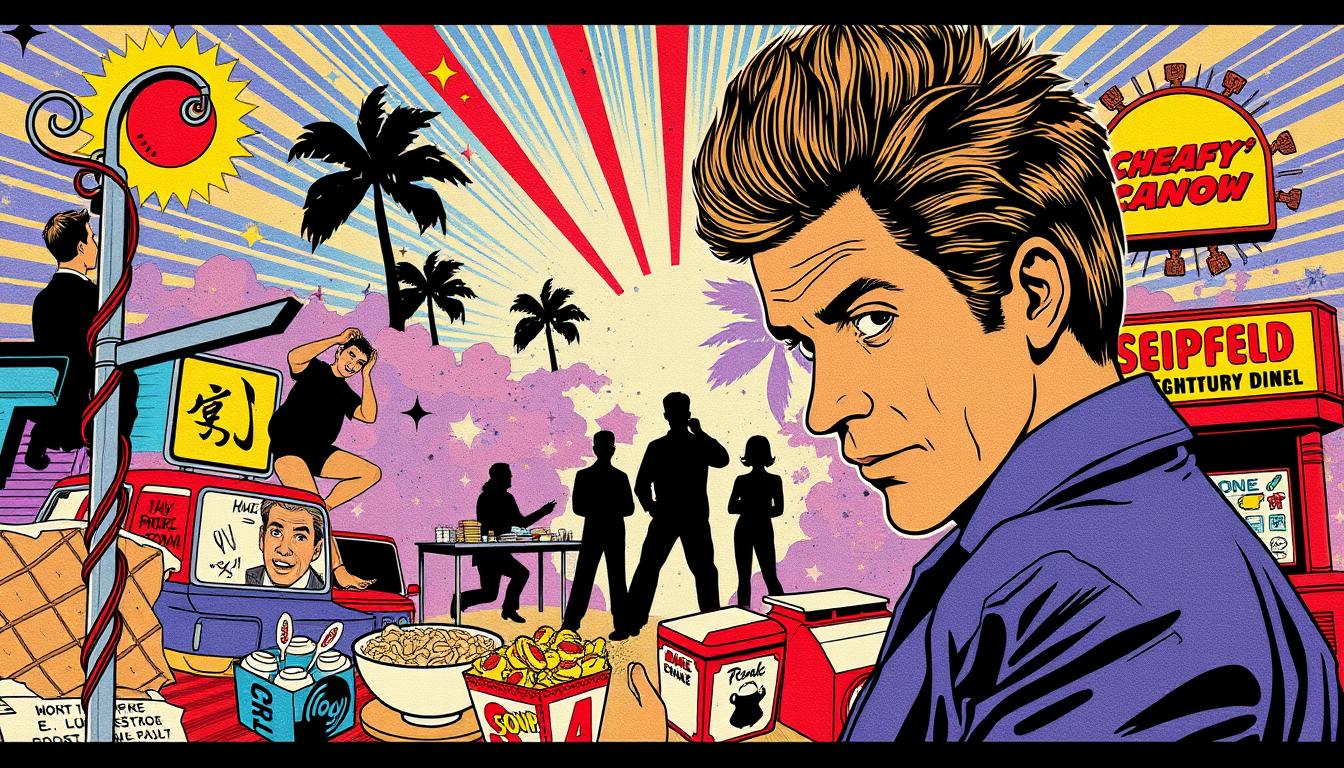
Seinfeld in Movies and TV Shows
Many movies and TV shows have paid homage to the series, often referencing its iconic moments. For example, The Simpsons and Family Guy have included parodies of episodes like “The Soup Nazi.” These nods highlight the show’s lasting impact on comedy.
Even dramas like Breaking Bad have subtly referenced the series, proving its appeal across genres. These references are a testament to its universal relatability and humor.
Seinfeld-Themed Events and Merchandise
The show’s popularity has led to a variety of themed events and merchandise. Over 150 NYC bus tours annually take fans to iconic locations like Monk’s Cafe. These tours celebrate the show’s connection to the city.
Merchandise sales have also soared, with annual revenue reaching $50 million. Here’s a list of some of the most popular items and events:
- Festivus: The holiday created by George’s father has been adopted by fans worldwide.
- Soup Nazi Chains: Restaurants inspired by the infamous character have popped up in various cities.
- Pop! Figures: Collectible figurines of the main characters are a hit among fans.
- Seinfeld Experience VR Game: A virtual reality game lets fans step into the show’s world.
- “Serenity Now!” Wellness Products: Inspired by Frank Costanza’s mantra, these items promote relaxation.
These things show how the series continues to resonate with audiences. Its ability to inspire creativity in others is a testament to its enduring legacy.
The Best Seinfeld Quotes You Need to Know
The series gave us lines that are still quoted today. Its clever writing turned everyday phrases into cultural staples. With a 92% rewatchability factor on Netflix and 18 million quote tweets annually, these quotes have become part of our daily lives.
Quotes That Defined the Show
Some lines from the series have become iconic. For example, “No soup for you!” is now used in customer service training. It’s a perfect way to teach about rules and consequences.
Another memorable quote is “Master of my domain,” which has inspired trivia nights. This line from the famous “episode” “The Contest” remains a fan favorite. It’s a testament to the show’s ability to tackle taboo topics with humor.
Lines That Still Make Us Laugh
Even after all this time, certain quotes still bring a smile. “You’re so good looking” is a pickup line that’s both funny and effective. It’s a perfect example of the show’s unique humor.
“Yada Yada” has even made its way into legal documents. This phrase, used to skip over details, is now a shorthand for storytelling. It’s a reminder of how the series influenced everyday language.
Lastly, “Double dip” has been referenced in CDC guidelines. This line from “The Implant” episode shows how the show’s humor remains relevant today.
Seinfeld’s Cultural Impact: Beyond the Screen
The influence of this legendary sitcom extends far beyond its episodes, shaping how we communicate and interact daily. From catchphrases to social norms, the show has left an indelible mark on our culture. Its humor and relatability continue to resonate, making it a timeless classic.
How Seinfeld Shaped Everyday Language
The show introduced phrases that have become part of our everyday vocabulary. For example, “No soup for you!” is now used in customer service training to teach about rules and consequences. Another iconic line, “Yada Yada,” has become a shorthand for skipping over details in conversations.
Even the phrase “Not that there’s anything wrong with that” has been adopted in corporate sensitivity trainings. These examples highlight how the show’s clever writing has influenced how we communicate.
The Show’s Influence on Social Norms
Beyond language, the series has impacted social behaviors. Etiquette experts often reference the show, with 55% citing it in their teachings. For instance, “The Pick” episode led to a trend of avoiding handshakes, while “The Marine Biologist” inspired career choice spikes in that field.
The infamous “Soup Nazi” has even influenced service industry training, emphasizing the importance of customer interactions. Additionally, “The Merv Griffin Show” inspired a wave of podcasts, proving the show’s lasting influence on media formats.
- “Soup Nazi” Service Training: Used to teach customer service etiquette.
- “Marine Biologist” Career Spikes: Inspired interest in marine biology.
- “The Pick” Handshake Avoidance: Led to a trend of avoiding handshakes.
- “The Merv Griffin Show” Podcasts: Inspired a new wave of media formats.
- “Fusilli Jerry” Pasta Sales: Increased sales of fusilli pasta.
From language to social norms, the show’s impact is undeniable. Its ability to turn everyday situations into cultural touchstones is why it remains a beloved part of our lives.
Revisiting Seinfeld: Why Fans Keep Coming Back
Decades after its finale, the series continues to draw fans old and new, proving its timeless charm. Its unique humor and relatable characters have made it a staple in many households. Whether you grew up watching it or discovered it later, the show’s appeal is undeniable.
The Timeless Appeal of Seinfeld
The show’s focus on everyday life resonates with audiences of all ages. Its humor doesn’t rely on trends or pop culture references, making it just as funny today as it was in the ’90s. From awkward social interactions to mundane annoyances, it captures the quirks of human behavior.
One reason for its lasting popularity is its pre-social media nostalgia. The show reflects a simpler time when people interacted face-to-face, not through screens. This connection to the past makes it a comforting escape for many viewers.
Why New Generations Love the Show
Younger audiences are discovering the series through streaming platforms. Its humor translates well to the smartphone era, where short, witty clips are shared widely. Quotes like “No soup for you!” are still used, even by those who haven’t seen the show.
Gen Z has a particular fondness for Kramer’s eccentric personality. His physical comedy and unpredictable antics make him a standout character. The show’s fashion has also seen a revival, with trends like oversized blazers and high-waisted jeans making a comeback.
- Smartphone-Era Relatability: Short, witty moments perfect for sharing online.
- Pre-Social Media Nostalgia: A reminder of simpler times.
- Fashion Revival: Iconic ’90s styles are back in trend.
- Gen Z’s Kramer Admiration: His eccentricity resonates with younger viewers.
- Pandemic Binge-Watching Spikes: Many turned to the show for comfort during lockdowns.
With 89% of parent-child viewing pairs enjoying the show together, it’s clear that its appeal spans generations. Whether you’re revisiting it or discovering it for the first time, the series continues to bring laughter and joy to people worldwide.
Conclusion: The Enduring Legacy of Seinfeld
Even decades later, the cultural staying power of this iconic comedy series remains unmatched. Set in the heart of New York City, it continues to influence modern humor and inspire new generations of fans.
With upcoming projects like Netflix specials and the *Unfrosted* sequel, the legacy of *Seinfeld* is far from over. The 35th anniversary celebrations are a testament to its timeless appeal, bringing fans together to relive classic moments.
Whether you’re a longtime viewer or new to the show, revisiting its episodes is a must. From the Soup Nazi to Festivus, each moment is a reminder of why this series remains a cultural touchstone.
As fans, we can all agree: “Not that there’s anything wrong with” loving *Seinfeld* forever. Its humor, characters, and unforgettable lines ensure it will always hold a special place in our hearts.
