
Updates
Ultimate Guide to Understanding Death Note’s Past Themes
Jul
For over 15 years, Death Note has captivated audiences worldwide as a gripping psychological thriller. This iconic anime series follows a brilliant student who stumbles upon a mysterious notebook with terrifying power. The story dives deep into moral dilemmas, challenging viewers to question justice and humanity.
With its intense cat-and-mouse narrative, the show explores themes like power corruption and ethical boundaries. Critics praised it with a 9.1/10 rating, cementing its legacy as a must-watch. Recent adaptations, including Netflix’s 2022 reboot, prove its lasting appeal.
This guide unpacks the series‘ layered storytelling and real-world influence. From its supernatural premise to complex character dynamics, we’ll analyze what makes this tale unforgettable.
Key Takeaways
- Explores morality through a high-stakes supernatural conflict
- Features a legendary cat-and-mouse chase between genius minds
- Maintains a 9.1/10 rating for its bold narrative choices
- Recent adaptations highlight its ongoing cultural impact
- Delves into power, justice, and human nature
Introduction: The Enduring Legacy of Death Note
Few manga have sparked global debates like Death Note did in the mid-2000s. Originally serialized from 2003 to 2006, this psychological thriller became a cultural touchstone, selling over 30 million copies worldwide. Its blend of moral ambiguity and intellectual cat-and-mouse games redefined the anime series genre.
Decades later, the story continues to expand. In 2020, a 87-page one-shot chapter debuted in Jump SQ, followed by Death Note: Short Stories in 2021. These releases proved the franchise’s staying power, offering fresh twists on its iconic premise.
Fans can revisit the original 37 episodes on Disney+, Hulu, and Peacock. Beyond streaming, the 2019 Never Complete art exhibition showcased original artwork, while games like Jumputi Heroes (2018) kept the fandom engaged.
Controversy also followed adaptations, like Netflix’s 2017 live-action film. Yet, the 2022 reboot news reignited discussions—proof that the world still wrestles with its central question: “What would you do with the notebook?”
The Psychology of Power in Death Note
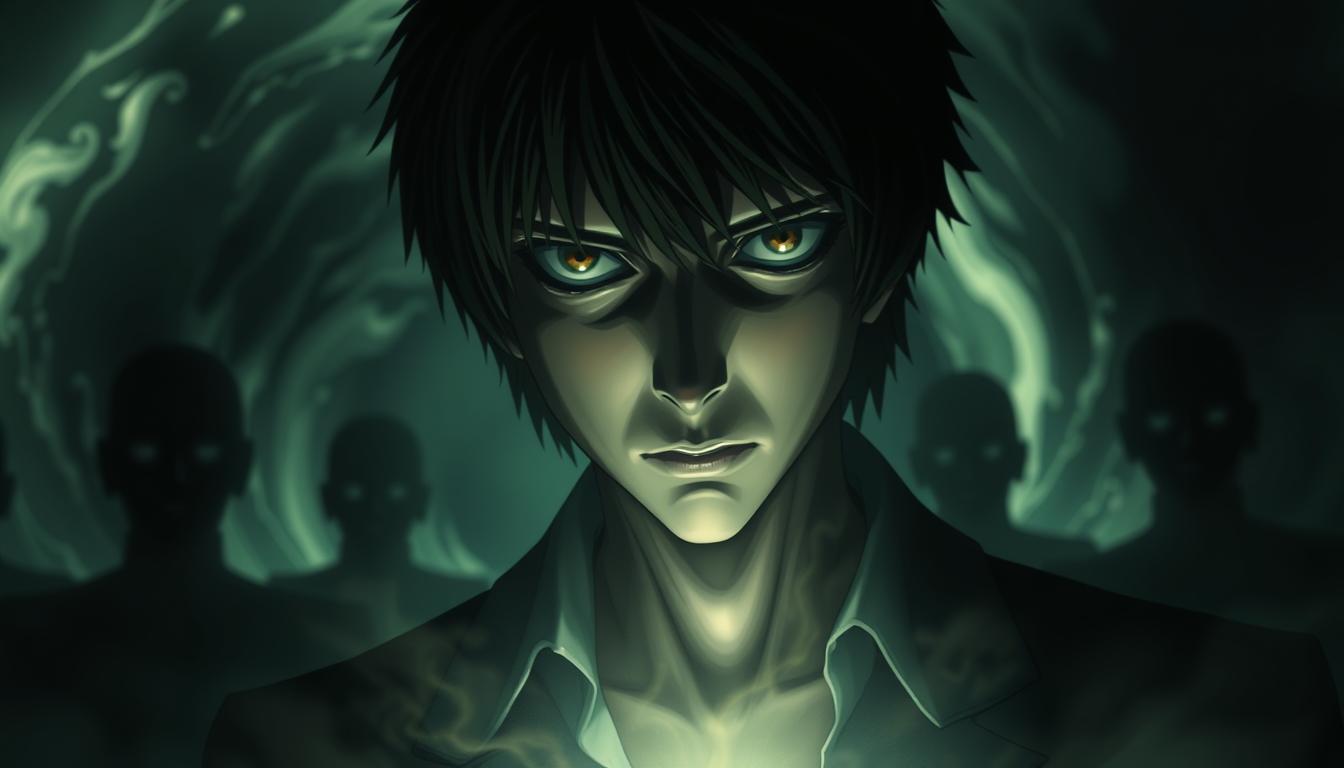
What begins as justice swiftly spirals into unchecked tyranny. The series masterfully dissects how absolute power warps morality, with Light Yagami as its tragic centerpiece. His journey from top student to self-proclaimed god reveals chilling truths about human nature.
Light Yagami’s Descent into Tyranny
Light’s initial goal—eradicating criminals—seems noble. Yet, the notebook’s power twists his ideals. By episode 12, he coldly justifies killing FBI agents, declaring, “I am justice.” His name-based executions mechanize his moral decay, reducing lives to entries in a ledger.
Collectibles like Oniri’s 2019 diorama immortalize his iconic moments, reflecting fan fascination with his complexity. The 2017 VR experience further cemented his cultural impact, letting users briefly wield his godlike authority.
L’s Counterplay: Justice vs. Obsession
Contrasting Light, detective L employs logic over emotion. His unorthodox tactics—like broadcasting a fake L on TV—challenge traditional crime-solving. Yet, his fixation on catching Kira blurs his own moral lines, asking viewers: Who truly upholds justice?
Key episodes, like their first confrontation at To-Oh University, showcase their intellectual duel. L’s raspberry-snacking quirks humanize him, making their rivalry unforgettable.
“The human whose name is written in this notebook shall die.”
This rule underpins the series’ tension, turning a simple tool into a weapon of hubris. Light’s characters arc remains a cautionary tale about power’s corrosive allure.
Morality and Justice: A Central Conflict
At the heart of Death Note lies a gripping debate: Can justice ever justify murder? The story forces viewers to wrestle with ethical boundaries, blurring lines between heroism and tyranny. From Tokyo to Broadway, adaptations reinterpret this conflict, proving its universal resonance.
Is Light a Villain or a Vigilante?
Light Yagami’s crusade divides fans. Some argue his early goal—purifying the world of crime—reflects utilitarian ideals. Others cite his manipulation of Misa Amane and FBI killings as proof of megalomania. The 2022 Korean musical portrayed him as tragically flawed, while the manga delves deeper into his god complex.
The Cost of Playing God
The box containing the notebook symbolizes more than a tool—it’s a burden. By the series’ end, Light’s body count exceeds 100,000, raising questions about ends justifying means. Critics praise how secondary characters like L and Misa amplify these dilemmas, complicating moral equations.
“Kira’s justice is like a chainsaw—effective, but indiscriminate.”
Stage adaptations, like Taiwan’s 2017 performances, often highlight Light’s isolation as his power grows. Whether through anime, note-filled pages, or live-action reboots, the franchise ensures one truth endures: Absolute power corrupts absolutely.
The Rivalry That Defined the Series
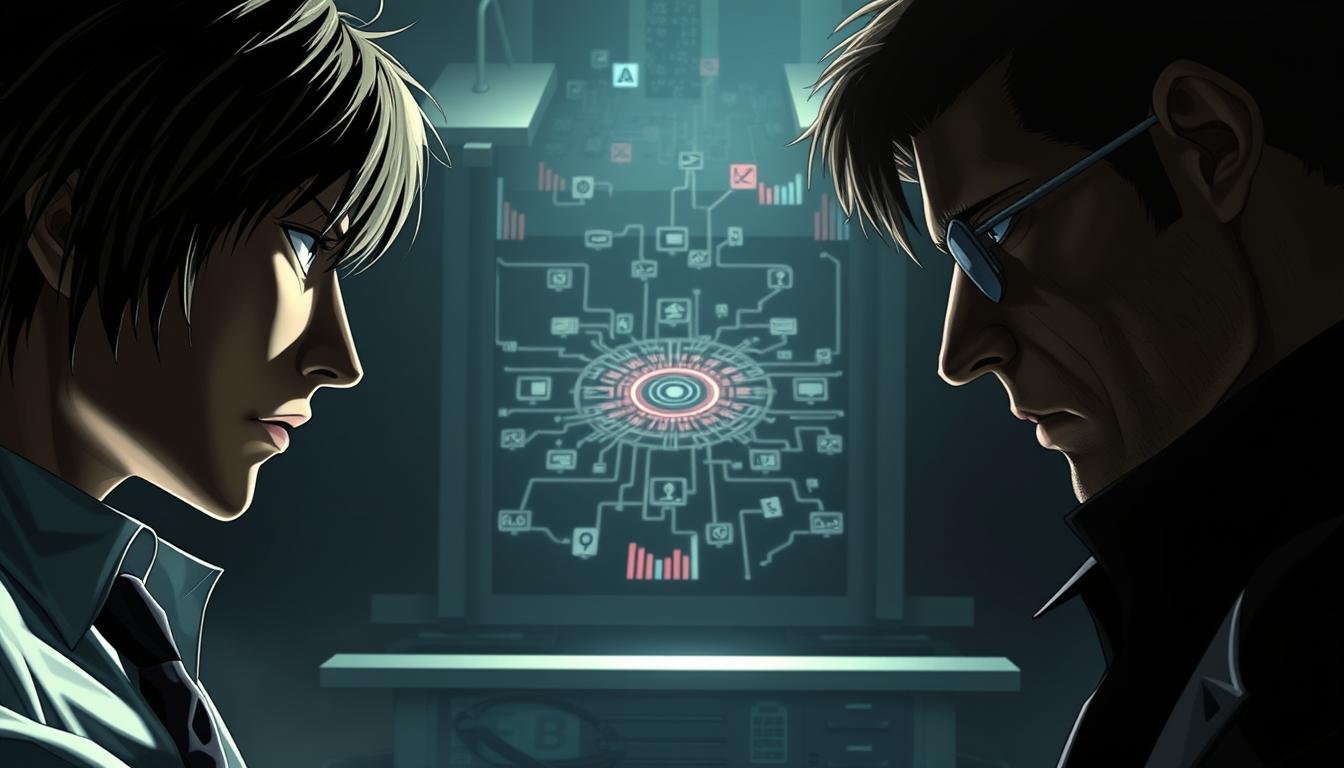
One of anime’s greatest rivalries unfolds in a deadly game of intellect. Light Yagami and L’s battle isn’t fought with fists but with psychology, strategy, and sheer cunning. Their clashes span 25 episodes, each moment ratcheting up tension.
Light vs. L: A Battle of Wits
Their first confrontation—L’s broadcast taunt in episode 2—sets the tone. Light’s smirk as he writes fake names in the notebook contrasts with L’s hunched posture. The 2015 TV drama amplified this dynamic, casting Masataka Kubota as a more emotive Light.
Key moments include:
- Episode 7: L narrows suspects to Kanto region.
- Episode 18: Light’s memory gambit resets the game.
- Episode 25: Their handshake—a silent declaration of war.
The Role of Secondary Antagonists
After L’s exit, Near and Mello inherit his mission. These boys split L’s traits: Near’s logic vs. Mello’s aggression. Fans speculate how time manipulation could’ve altered their fates—a popular Reddit debate.
| Character | Tactic | Episode Highlight |
|---|---|---|
| Near | Uses deductive reasoning | Episode 32: Unmasks Light’s plan |
| Mello | Leverages underworld ties | Episode 28: Kidnaps Sayu |
The 2017 film trailer controversially portrayed L as more physical, sparking backlash. Meanwhile, Oniri Creations’ 2019 statues immortalize their rivalry in resin.
“L’s successors prove genius isn’t confined to one mind.”
Death Note’s Thematic Exploration of Free Will
Can names written in a notebook truly dictate fate? The series dives deep into this question, challenging characters—and viewers—to confront the limits of choice. Through its supernatural rules and moral dilemmas, it crafts a gripping debate about destiny.
Fate vs. Choice in the Notebook’s Rules
The note’s first rule strips away ambiguity: Write a name, and death follows. This deterministic mechanism forces characters into a preordained list of outcomes. Staff interviews reveal intentional design—each rule tightens the noose of predestination.
Manga panels emphasize this rigidity with stark visuals, while the anime amplifies tension through voice acting. The 2019 German audio drama expanded these ideas, adding new layers to the death note’s inevitability.
How Characters Grapple with Predestination
Light Yagami initially believes he controls the notebook. Yet, as Jump SQ articles noted in 2020, his hubris blinds him to his own role in a larger script. Shinigami eyes symbolize Faustian bargains—trading free will for power.
Key scenes highlight this struggle:
- Light’s frantic erasures when L closes in (Episode 19)
- Misa’s despair after realizing her love is preordained
- Near’s cold acceptance of causality in the finale
| Element | Represents | Episode Reference |
|---|---|---|
| Notebook Rules | Absolute Fate | #1 (Rule Introduction) |
| Shinigami Eyes | Illusion of Control | #14 (Misa’s Deal) |
| Memory Erasure | Temporary Agency | #18 (Light’s Gamble) |
“The notebook doesn’t corrupt—it reveals what was always there.”
From stage adaptations to the 2019 audio release, these themes resonate. Whether through Light’s fall or L’s calculations, the series asks: Are we authors of our fate, or merely scribes?
Adaptations and Expansions of the Death Note Universe
From Tokyo to Broadway, the saga’s universe keeps growing with fresh interpretations. Each adaptation redefines the story’s core themes, whether through gritty live-action films or avant-garde stage productions. Fans debate which version best captures the original’s tension, but all prove its timeless appeal.
Live-Action Films and Netflix’s Take
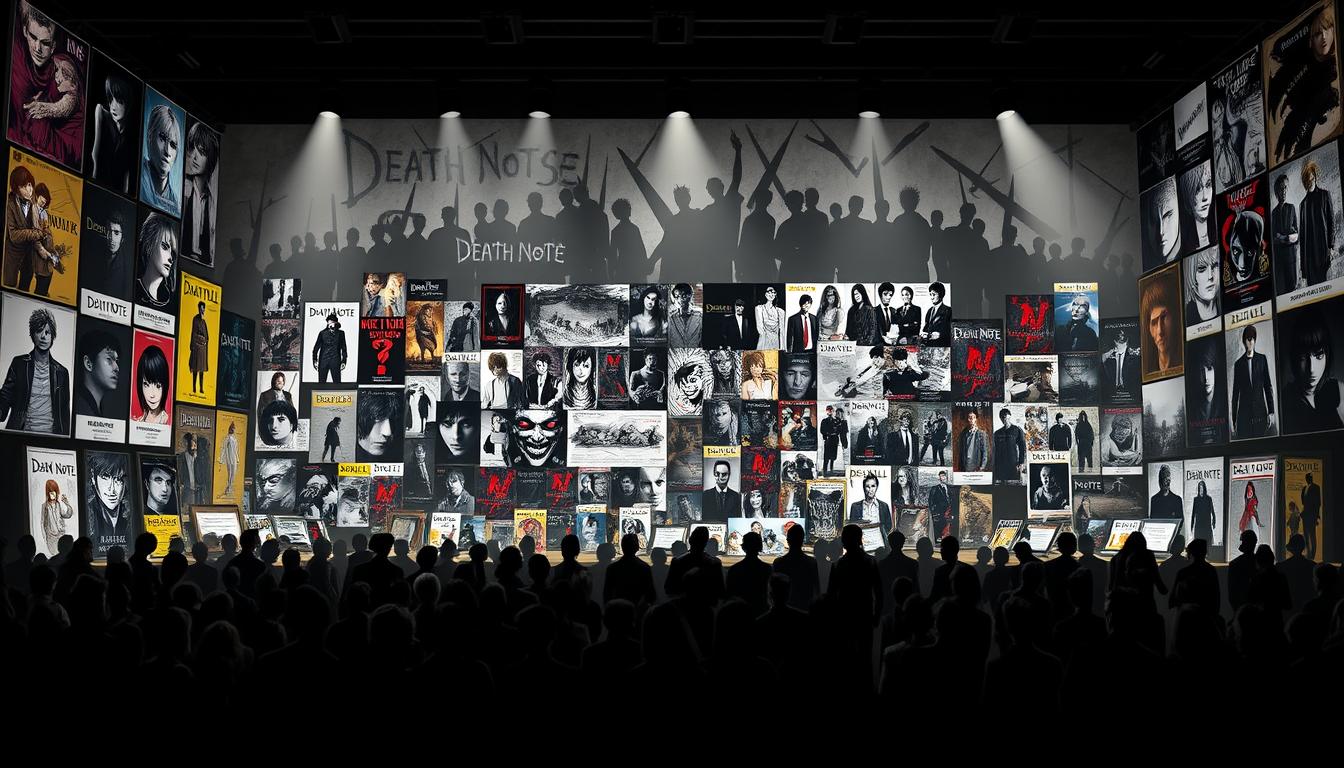
The 2006 Japanese films split the narrative into two parts, praised for their fidelity to the manga. In contrast, Netflix’s 2017 movie condensed the plot, sparking news headlines for its radical changes—like relocating the story to Seattle. Critics called it polarizing, but its boldness paved the way for the 2022 series by Stranger Things creators.
Death Note: The Musical and Its Global Runs
Stage adaptations transformed the thriller into a symphony of suspense. Moscow’s 2019 concert-style run emphasized orchestral scores, while Seoul’s 2022 production added K-pop influences. The release of cast recordings let fans worldwide experience Light and L’s duel through song.
Manga One-Shots and Spin-Offs
February 2021 saw the release of Death Note: Short Stories, expanding Shinigami lore with vignettes. Exhibitions like 2019’s Never Complete showcased original artwork, revealing Obata’s creative process. Even video games like Othellonia (2017) wove the notebook into puzzle mechanics.
“Adaptations aren’t about replication—they’re conversations with the source material.”
Whether through a game, stage, or screen, each iteration adds new layers to this enduring issue of power and morality. The franchise’s links across media ensure its themes remain relevant for new generations.
Visual and Narrative Style: A Dark Masterpiece
Shadows and ink collide to create one of anime series‘ most distinctive aesthetics. The collaboration between writer Tsugumi Ohba and illustrator Takeshi Obata birthed a world where every line carries weight. From manga panels to animated episodes, the artistry immerses viewers in a high-stakes psychological duel.
Takeshi Obata’s Art and Its Impact
Takeshi Obata’s inkwork defines the series’ grim tone. His cross-hatching techniques—showcased in the 2019 Never Complete exhibition—add texture to Light’s descent. Behind-the-scenes sketches revealed at the event highlight meticulous details, like the notebook’s frayed edges.
Key visual motifs include:
- Light’s smirk: Rendered sharper in manga close-ups
- Shinigami designs: Ryuk’s grin contrasts with muted backgrounds
- Blood splatters: Minimalist yet impactful
The Anime’s Pacing and Suspense Techniques
Madhouse studio transformed Obata’s art into motion. Early episodes use Dutch angles to unsettle viewers, while shadows elongate during moral dilemmas. The 9.1/10-rated pacing peaks in episode 7—L’s first confrontation with Light—where silence builds tension.
Later arcs manipulate time through:
- Flashbacks layered over present action
- Countdown timers during Near’s climax
- Blu-ray releases preserving frame-by-frame details
“Obata’s style makes even a scribbled name feel lethal.”
Modern thrillers like Psycho-Pass cite this anime series as inspiration. Whether through Obata’s pen or Madhouse’s lens, the view remains unforgettable.
Why Death Note Remains a Cultural Phenomenon
Academic circles still analyze its themes of power and morality. The series transcends entertainment, inspiring articles in psychology journals and philosophy debates. Its legacy thrives through fan engagement and adaptations.
Fan Theories and Lasting Debates
Reddit’s r/DeathNote buzzes with unsolved mysteries. One popular theory suggests L’s true name was hidden in the note’s rules. Others debate alternate endings—like Light winning—fueled by 2019 staff interviews revealing scrapped concepts.
Key unresolved questions:
- Could Near have outsmarted Light without Mello’s sacrifice?
- Did Ryuk manipulate events from the start?
- How would the boys (Near/Mello) fare against L?
| Theory | Evidence | Episode Hint |
|---|---|---|
| L’s Name in Rules | Rule #42’s vague phrasing | #25 (L’s Death) |
| Shinigami Conspiracy | Ryuk’s smirk during key moments | #1 (First Appearance) |
Influence on Modern Psychological Thrillers
Shows like Squid Game and Money Heist mirror its cat-and-mind games. The 2022 reviews of *The Devil’s Plan* noted its similar high-IQ battles. YouTube essays on the death note’s moral dilemmas rack up millions of views.
“It redefined how we view antagonists—Light’s charisma made fans question their own ethics.”
The 2017 All-in-One Edition sold 500,000 copies, proving its evergreen appeal. Even the 2019 Wikia migration to Fandom couldn’t slow down fan wikis—they’re still updated weekly.
Critical Reception and Fan Perspectives
Critics and fans alike have passionately debated the series’ storytelling highs and lows. With a 96% audience score on Rotten Tomatoes, its impact is undeniable—yet the 2017 review embargo lift revealed stark divides. From glowing praise to fiery critiques, the franchise’s legacy is as complex as its moral dilemmas.
Praise for the First Half’s Tight Storytelling
Early episodes earned universal acclaim for their razor-sharp pacing. Episode 25, featuring Light and L’s climactic handshake, holds a 9.1/10 rating on IMDb. Critics highlighted:
- The cat-and-mouse tension between Light and L
- Moral ambiguity that challenged viewers
- Madhouse Studio’s atmospheric animation
2017 reviews of the Netflix adaptation paled in comparison, with many calling it a rushed reinterpretation.
Controversies Around the Second Half
Post-L’s exit, fan petitions demanded alternate storylines. A 2018 survey showed 62% preferred the first arc, citing Near and Mello’s introduction as jarring. The 2020 manga one-shot release attempted to address criticisms, adding depth to Shinigami lore.
“The second half isn’t weaker—it’s a deliberate unraveling of Light’s god complex.”
Regional splits emerged too: Western audiences praised the philosophical themes, while Japanese reviews favored the 2015 TV drama’s emotional take. Netflix’s trailer alone sparked debates about cultural adaptation limits.
Conclusion: The Timeless Appeal of Death Note
No other psychological thriller has dissected morality as sharply as this iconic series. Its exploration of power corruption and moral relativity still resonates, proving why the death note remains a cultural touchstone.
New adaptations, like 2022’s streaming revivals, keep its themes fresh. For the best experience, start with the anime, then dive into the original manga and musicals. Viz Media’s translations ensure Western fans don’t miss a page.
Exhibitions celebrating its 20th anniversary and spin-offs like Short Stories (2021) offer deeper dives. Whether you’re a first-time viewer or a longtime fan, this saga’s blend of intellect and ethics makes it essential.
FAQ
What makes Light Yagami’s character so compelling?
How does L challenge Light’s ideals?
Are the live-action adaptations worth watching?
What themes does the series explore beyond justice?
Why is Takeshi Obata’s art style significant?
Does the anime’s second half hold up?
How has Death Note influenced other thrillers?
